Eren Yeager is one of anime’s most recognizable protagonists, and a huge part of that impact comes from the performances behind his voice. From his furious childhood determination to his increasingly restrained and complicated adult personality, Eren’s voice changes dramatically as Attack on Titan progresses. That naturally leads many fans to search for the eren voice actor and wonder who brought the character to life so convincingly.
The answer depends on which version of Attack on Titan you watch. In the original Japanese version, Eren is voiced by Yuki Kaji, while the English dub features Bryce Papenbrook. Both actors became closely associated with the character, but their interpretations have distinct qualities that make the Japanese and English versions worth experiencing separately. Official Attack on Titan materials list Kaji as Eren, while major cast databases also credit Papenbrook for the English version.
This article takes a closer look at both performers, their careers, the challenges of voicing Eren, and why their performances have remained so memorable.
Who Is the Japanese Eren Voice Actor? Yuki Kaji
When people ask for the eren voice actor in the original Attack on Titan anime, the answer is Yuki Kaji. Kaji provides Eren Yeager’s Japanese voice throughout the anime and is one of the performers most strongly associated with the character. The official Attack on Titan: The Final Season site lists “Eren Jaeger: Yuki Kaji” in its cast information, confirming his role through the concluding portion of the story.
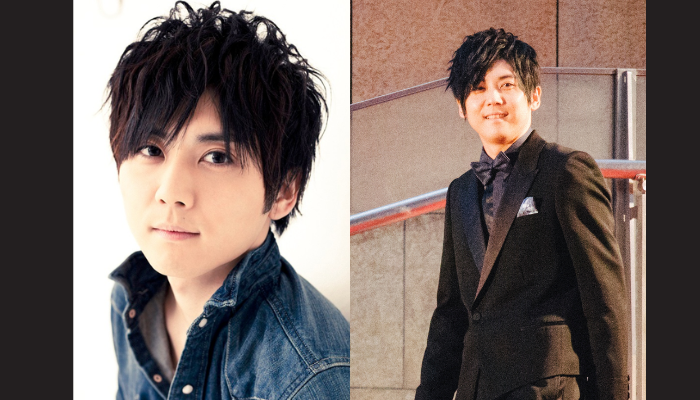
Kaji was born in Tokyo on September 3, 1985, and made his voice-acting debut in 2004. Over the course of his career, he has become one of Japan’s best-known voice actors, taking on major characters in series such as My Hero Academia, The Seven Deadly Sins, Haikyu!!, One-Punch Man, JoJo’s Bizarre Adventure, and Pokémon. A Takara Tomy profile notes that he won the Best Voice Actor Award at the Seiyu Awards for two consecutive years and has also worked in narration, stage productions, live-action projects, and other areas of entertainment.
What makes Kaji’s Eren especially impressive is the sheer range required by the character. Early Eren is loud, impulsive, emotional, and often driven by anger. He shouts his ambitions, reacts intensely to danger, and frequently sounds like a teenager who believes that determination alone can overcome the world. Kaji captures that youthful volatility without making Eren feel one-dimensional.
As the story develops, however, Eren’s personality becomes much more difficult to read. He speaks less impulsively, becomes quieter and more deliberate, and carries the weight of experiences that fundamentally change how he sees freedom, enemies, friends, and himself. Kaji’s performance evolves with him. The contrast between Eren’s younger voice and his later, more controlled delivery helps audiences understand the passage of time even before the animation makes it obvious.
The official materials for the final season are particularly useful here because they establish that Kaji remained Eren’s Japanese voice as the character reached the most complicated stages of his journey. MAPPA’s production information likewise credits Yuki Kaji as Eren Yeager for The Final Season.
Who Is Eren’s English Voice Actor? Bryce Papenbrook
For viewers watching the English dub, the eren voice actor is Bryce Papenbrook. He voices Eren Jaeger in the English-language version of Attack on Titan, including the character’s major transformations across the series. IMDb’s cast information credits Papenbrook as Eren Jaeger in the English version, while Crunchyroll reported his casting when the English dub was introduced in 2014.
Papenbrook is an American voice actor known for a large body of anime, animation, and video-game work. Among his other well-known roles are Kirito in Sword Art Online, Rin Okumura in Blue Exorcist, Meliodas and other characters in The Seven Deadly Sins, and Adrien Agreste/Cat Noir in Miraculous: Tales of Ladybug & Cat Noir. His professional career began when he was young, and Supanova notes that he entered voice acting at age eight after being introduced to the industry by his father, Bob Papenbrook.
Papenbrook’s approach to Eren is particularly notable because the English performance has to communicate the same emotional progression while fitting naturally into an English-language dub. The character begins as an intensely passionate teenager and gradually becomes an adult whose emotions are increasingly hidden beneath a controlled exterior. That requires considerably more than simply shouting loudly during dramatic scenes.
One interesting aspect of Papenbrook’s performance is the physical intensity of Eren’s early characterization. Eren spends much of the opening portion of Attack on Titan experiencing fear, rage, grief, determination, and desperation. His screams and battle cries are an important part of the character’s identity. Later, the challenge changes: rather than constantly projecting emotion, the actor has to communicate tension through restraint.
Papenbrook has also discussed the unusual demands of playing Eren. A profile of the character notes that he approached Eren differently from some of his other roles and used different vocal qualities to reflect Eren at different ages and stages. The performance therefore had to change as Eren changed, rather than remaining fixed throughout the series.
The English dub was also significant because Papenbrook was already familiar with the series before being cast. Crunchyroll reported that he was introduced as Eren’s English voice at the Attack on Titan English premiere at Anime Boston in 2014.
Why Eren’s Voice Acting Is So Important to Attack on Titan
Eren is not a character who remains emotionally static. In fact, his development is one of the central reasons Attack on Titan became such a widely discussed anime. His voice has to communicate not only what he is saying but also what he is withholding. That makes the role unusually demanding for a voice actor.
At the beginning, Eren is relatively straightforward to understand. He is horrified by the Titans, devastated by the loss of his mother, and determined to destroy the creatures responsible for humanity’s suffering. His anger is immediate and visible. A strong, energetic vocal performance makes perfect sense for this version of the character.
Later, the emotional equation becomes much more complicated. Eren gains knowledge that changes his understanding of the world, and his relationship with his friends becomes increasingly strained. The character starts speaking with greater control and often leaves audiences wondering what he is truly thinking. At that point, silence, pauses, vocal weight, and subtle changes in tone become just as important as shouting.
This is where the performances of Kaji and Papenbrook become especially valuable. Neither actor can simply play Eren as an angry hero from beginning to end. They must age him emotionally as well as vocally. The result is a performance that helps audiences feel the difference between the Eren of the early episodes and the Eren encountered later.
Kaji’s Japanese interpretation has often been praised for its emotional intensity, particularly in scenes where Eren is pushed beyond his limits. His ability to move from youthful shouting to quieter, heavier dialogue gives the character a distinctive trajectory. Papenbrook similarly has to navigate the transition from an impulsive teenage protagonist to a much more controlled adult figure.
The role also becomes increasingly demanding because Eren’s Titan form is not simply an unrelated monster. It is an extension of Eren himself. Kaji’s interpretation treats the Titan’s vocalizations as connected to the character, reinforcing the idea that the creature and the human are parts of the same identity. Discussions of the character’s production history have specifically highlighted Kaji’s interest in voicing Eren’s Titan form because he viewed it as an extension of Eren.
In other words, the voice acting does not merely decorate the animation. It becomes part of the storytelling. A change in vocal tone can tell viewers that Eren has changed before the script explicitly explains it.
Yuki Kaji vs. Bryce Papenbrook: How Do Their Eren Performances Differ?
Comparing Yuki Kaji and Bryce Papenbrook is not necessarily about deciding which actor is “better.” They are performing the same character for different language versions, with different dialogue rhythms, cultural contexts, recording processes, and performance traditions. Each brings a distinct interpretation to Eren.
Kaji’s Japanese performance often emphasizes the raw emotional extremes of Eren. His younger Eren can sound explosive and almost painfully earnest, which suits a character who sees the world in stark terms. As Eren becomes older, Kaji increasingly relies on restraint. His later delivery can feel colder and more distant, creating a striking contrast with the passionate teenager heard earlier in the series.
Papenbrook’s English performance similarly reflects Eren’s development but has its own vocal identity. His interpretation gives Eren a forceful, recognizable English-speaking presence, particularly during battle scenes and emotional confrontations. The English version also benefits from Papenbrook’s experience playing young male protagonists in major anime productions.
The differences can be fascinating for bilingual or multilingual fans. A line that sounds explosive in Japanese may have a somewhat different emotional texture in English, even when the meaning remains broadly consistent. This is normal in dubbing. Voice actors are not simply translating words; they are recreating a performance that has to sound natural in another language.
The distinction becomes even more interesting in Eren’s quieter scenes. Early Eren can be played primarily through anger and determination, but later Eren requires ambiguity. His voice must sometimes make the audience question whether he is frightened, resigned, angry, manipulative, or emotionally exhausted. The ability to leave those possibilities open is one of the most important aspects of the character’s later performance.
Major cast listings confirm the basic division clearly: Yuki Kaji is credited with Eren Yeager in the Japanese version, while Bryce Papenbrook is credited with Eren Jaeger in the English version.
For viewers trying to decide which version to watch, the simplest recommendation is to experience both if possible. Watching the same dramatic sequence in Japanese and English can reveal how much voice acting contributes to the emotional interpretation of an anime character.
Other Notable Roles and the Legacy of Eren’s Voice Actors
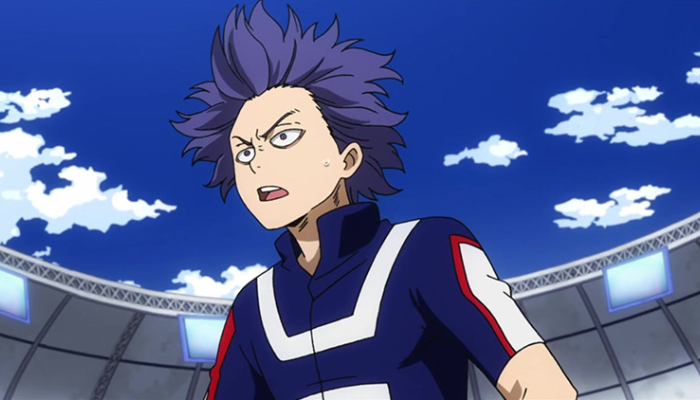
Eren is arguably the role most closely associated with Yuki Kaji internationally, but his career extends far beyond Attack on Titan. His other prominent performances include Shoto Todoroki in My Hero Academia, Meliodas in The Seven Deadly Sins, Kenma Kozume in Haikyu!!, Clemont in Pokémon, Yukine in Noragami, and Koichi Hirose in JoJo’s Bizarre Adventure. A recent industry profile describes Kaji as a household name in Japan and highlights his work in narration, stage performances, production, and other entertainment projects.
His filmography demonstrates why Eren is such an interesting role in his career. Kaji has voiced characters with dramatically different personalities, from energetic heroes and emotionally complicated protagonists to quieter supporting characters. His ability to change vocal character from one project to another is a major reason he has remained one of Japan’s prominent voice actors.
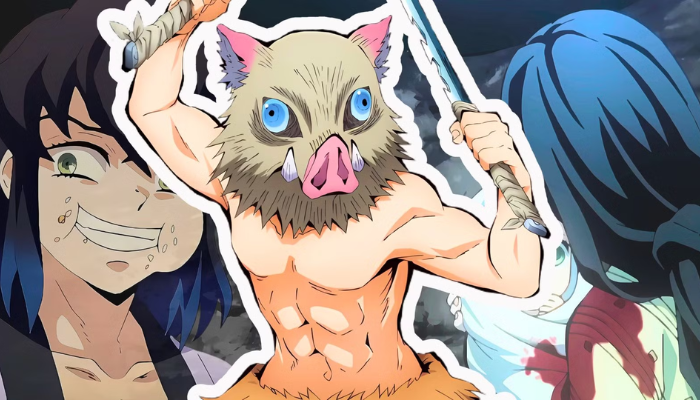
Bryce Papenbrook has an equally broad career in English-language animation and games. Beyond Eren, his credits include Kirito in Sword Art Online, Rin Okumura in Blue Exorcist, Inosuke Hashibira in Demon Slayer, and Cat Noir in Miraculous. His convention profiles also list work across video games, television, animation, and other media.
That range puts Eren in an interesting place within both actors’ careers. For Kaji, the character became one of the defining performances of modern anime. For Papenbrook, Eren became another major protagonist in a career already filled with recognizable English anime roles.
The legacy of both performances is also connected to the enormous cultural reach of Attack on Titan. The series ran from 2013 through its concluding material in 2023, giving both actors years to develop and maintain their interpretations of the same character. IMDb’s listings credit Kaji with Eren across the Japanese series and Papenbrook with the English version.
Ultimately, the success of the eren voice actor performances comes from their ability to make a fictional character feel emotionally real. Eren’s story is filled with enormous events—Titans, war, political conflict, betrayal, loss, and questions about freedom—but the voice remains the human connection between those events and the viewer.
Frequently Asked Questions About the Eren Voice Actor
1. Who is Eren’s voice actor in Japanese?
Yuki Kaji is the Japanese voice actor for Eren Yeager in Attack on Titan. The official anime cast lists him as Eren, including throughout The Final Season.
2. Who voices Eren in the English dub?
Bryce Papenbrook voices Eren Jaeger in the English dub of Attack on Titan. He was officially introduced as Eren’s English voice during the series’ English premiere in 2014.
3. Is Eren voiced by the same actor in every language?
No. Different language versions of Attack on Titan use different voice actors. Yuki Kaji voices Eren in Japanese, while Bryce Papenbrook voices him in English. Other international dubs have their own performers.
4. How old is Yuki Kaji?
Yuki Kaji was born on September 3, 1985, in Tokyo, Japan. He began his professional voice-acting career in 2004 and later became known for numerous major anime roles.
5. What other anime characters has Yuki Kaji voiced?
Some of Kaji’s best-known roles include Shoto Todoroki in My Hero Academia, Meliodas in The Seven Deadly Sins, Kenma Kozume in Haikyu!!, Clemont in Pokémon, Yukine in Noragami, and Koichi Hirose in JoJo’s Bizarre Adventure.
6. What other characters has Bryce Papenbrook voiced?
Papenbrook has voiced Kirito in Sword Art Online, Rin Okumura in Blue Exorcist, Inosuke in Demon Slayer, Cat Noir in Miraculous, and several other characters across anime, animation, and video games.
7. Does Yuki Kaji voice Eren’s Titan form?
Yes. Kaji’s performance encompasses Eren’s Titan identity as part of the Japanese version of the character. The role requires him to connect Eren’s human and Titan forms vocally, reinforcing the idea that the Titan is an extension of Eren.
8. Why does Eren’s voice sound different as he gets older?
Eren’s personality and circumstances change dramatically throughout Attack on Titan. The voice performances reflect that development by shifting from youthful intensity and anger toward a deeper, more restrained, and controlled delivery.
9. Is Bryce Papenbrook the original Eren voice actor?
If by “original” you mean the Japanese anime, then no. Yuki Kaji is the original Japanese voice of Eren. Papenbrook is the English dub actor and began voicing Eren for the English-language adaptation.
10. Which Eren voice actor is better: Yuki Kaji or Bryce Papenbrook?
There is no objective winner. Kaji and Papenbrook perform Eren in different languages and bring different strengths to the character. Fans who prefer the Japanese version may connect more strongly with Kaji’s performance, while English-dub viewers may prefer Papenbrook. The best choice ultimately depends on language preference and personal taste.
Conclusion
The answer to the question “Who is the eren voice actor?” is slightly more interesting than simply naming one person. Yuki Kaji is the Japanese voice of Eren Yeager, while Bryce Papenbrook provides his English voice. Both performers have played an essential role in transforming Eren from a furious young recruit into one of anime’s most complex and controversial protagonists.
Kaji’s Japanese performance is particularly notable for its emotional range and long-term consistency, while Papenbrook’s English interpretation gives the character a distinctive voice for international audiences. Their work demonstrates why great anime voice acting is about far more than reading dialogue. It requires understanding a character’s psychology, adapting vocal intensity to the story, and communicating emotions that may not be explicitly stated.
For anyone discovering Attack on Titan for the first time, Eren’s voice is one of the best reasons to pay close attention to the series’ performances. The difference between his youthful screams, determined declarations, quiet conversations, and later controlled delivery tells a story of its own. In that sense, both Yuki Kaji and Bryce Papenbrook did more than provide a voice for Eren—they helped define how audiences experienced him.
About the Author