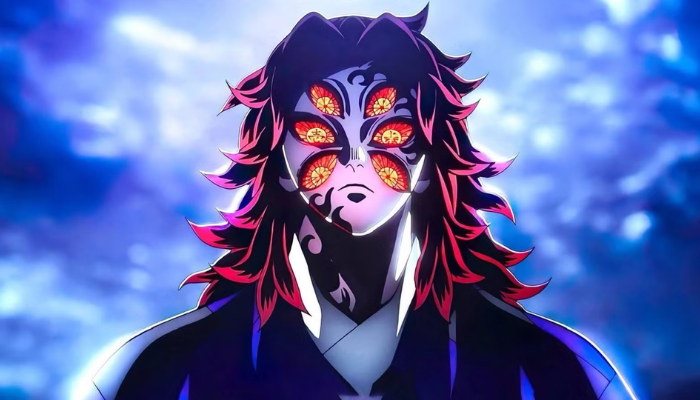
kokushibo is one of the most fascinating and formidable antagonists in Demon Slayer: Kimetsu no Yaiba, the popular Japanese manga and anime series created by Koyoharu Gotouge. Known as Upper Rank One among the Twelve Kizuki, kokushibo stands just beneath Muzan Kibutsuji, the progenitor of demons, in the hierarchy of the demon world. His overwhelming combat abilities, terrifying appearance, and centuries-long existence make him a major threat to the Demon Slayer Corps. However, what truly distinguishes kokushibo from other demons is not simply his strength but the tragic human history and complicated emotions hidden beneath his monstrous exterior.
Unlike demons who embrace cruelty without much hesitation, kokushibo carries the weight of a deeply personal past. Before becoming a demon, he was Michikatsu Tsugikuni, a skilled swordsman who lived during the Sengoku period. He was also the elder twin brother of Yoriichi Tsugikuni, a legendary warrior whose extraordinary talent shaped the history of demon slaying. Their relationship, marked by admiration, jealousy, ambition, and regret, provides the emotional foundation of kokushibo’s character. His transformation into a demon was closely connected to his inability to accept his own limitations and his desire to surpass his younger brother.
Throughout Demon Slayer, kokushibo represents the dangerous consequences of allowing envy and ambition to control one’s identity. His immense power is impressive, yet his personal history reveals the emotional vulnerability that makes him such a memorable antagonist. From his distinctive six-eyed appearance and Moon Breathing swordsmanship to his devastating battle against the Hashira, every aspect of his character contributes to his importance in the story. This comprehensive guide explores kokushibo’s origins, abilities, relationships, fighting style, and ultimate fate while examining why he remains one of the series’ most compelling villains.
Kokushibo’s Origin Story: From Michikatsu Tsugikuni to Upper Rank One
kokushibo’s story begins centuries before the main events of Demon Slayer, when he was known as Michikatsu Tsugikuni. Born into a samurai family during Japan’s Sengoku period, Michikatsu grew up in a world shaped by warfare, social expectations, and the pursuit of martial excellence. From an early age, he demonstrated considerable talent with a sword and developed a strong desire to become an exceptional warrior. His ambitions were also influenced by his family circumstances, particularly his relationship with his younger twin brother, Yoriichi.
Although Michikatsu was talented, Yoriichi possessed abilities that seemed almost impossible to comprehend. His natural understanding of swordsmanship, extraordinary perception, and remarkable physical gifts made him fundamentally different from ordinary warriors. Even as a child, Yoriichi demonstrated an understanding of combat that surpassed experienced swordsmen. Michikatsu initially struggled to reconcile his brother’s quiet personality with his astonishing potential, especially because Michikatsu himself had worked hard to become skilled.
The contrast between the brothers became a defining element of Michikatsu’s identity. Rather than finding complete satisfaction in his own achievements, he increasingly measured his worth against Yoriichi’s extraordinary talent. This comparison planted the seeds of resentment that would eventually influence his most consequential decisions. His jealousy did not emerge from a simple dislike of his brother. It developed from a painful mixture of admiration, insecurity, competitive ambition, and the fear of never becoming the warrior he wanted to be.
As the brothers grew older, their paths diverged dramatically. Yoriichi became associated with the origins of the Sun Breathing techniques, while Michikatsu pursued the life of a swordsman and eventually joined the Demon Slayer Corps. His experiences exposed him to the terrifying reality of demons and the extraordinary courage required to fight them. During this period, he encountered a level of combat potential that challenged his understanding of what a human being could accomplish.
Michikatsu learned Sun Breathing but could not reproduce it with the same effectiveness as Yoriichi. Instead, he developed Moon Breathing, a fighting style shaped around his own abilities. His accomplishments were significant, yet they never fully satisfied the ambition that drove him. As the limitations of his human lifespan became increasingly apparent, he faced the possibility that he would die before reaching his desired level of mastery.
His eventual transformation into kokushibo came through his encounter with Muzan Kibutsuji. Choosing demonic immortality offered Michikatsu a way to continue pursuing strength beyond the natural limits of human life. However, this decision came at a profound cost. He abandoned his humanity, accepted the consumption of human lives as part of his existence, and became an enemy of the very organization he had once served.
As Upper Rank One, kokushibo spent centuries refining his abilities and establishing himself as one of Muzan’s most dangerous subordinates. His transformation allowed him to preserve and expand his swordsmanship, but it did not erase the emotional conflict that had motivated his choices. Beneath his frightening appearance remained the legacy of Michikatsu Tsugikuni, a man who sacrificed almost everything in pursuit of a greatness he could never quite define for himself.
Kokushibo’s Appearance, Personality, and Psychological Complexity
One of the most recognizable features of kokushibo is his unsettling appearance. He possesses six eyes arranged across his face, long dark hair, and distinctive markings that emphasize his inhuman nature. His overall design combines the traditional image of a disciplined samurai with the disturbing characteristics of a powerful demon. Rather than relying solely on exaggerated physical size or monstrous proportions, his appearance communicates danger through precision, symmetry, and an almost unnatural sense of composure.
His clothing and sword also reinforce this visual identity. kokushibo typically wears traditional Japanese garments associated with his historical background, while his sword has a bizarre organic quality resulting from his demonic abilities. Its flesh-like structure and unusual eye-like details distinguish it from ordinary Nichirin blades. The combination of refined swordsmanship and grotesque weapon design reflects the central contradiction of his character: he retains the discipline of a human warrior while becoming increasingly removed from ordinary humanity.
His six eyes are particularly important because they symbolize both his enhanced perception and his transformation. As a demon, kokushibo possesses extraordinary visual awareness, allowing him to observe opponents and recognize details that other fighters might miss. His appearance also suggests a distorted relationship with vision itself. He has spent centuries looking for a way to surpass Yoriichi, yet his enhanced sight cannot provide the emotional clarity necessary to understand his own dissatisfaction.
Personality-wise, kokushibo is generally calm, serious, and highly disciplined. Unlike demons who enjoy humiliating opponents or indulging in unnecessary theatrics, he approaches combat with the focus of a seasoned martial artist. He respects skill and recognizes formidable adversaries, even when he ultimately intends to kill them. His manner of speaking is measured, and his movements demonstrate an extraordinary degree of control.
Nevertheless, his composure should not be mistaken for emotional freedom. kokushibo’s obsession with strength has shaped almost every major decision in his life. His jealousy toward Yoriichi remained influential long after his transformation, suggesting that immortality preserved his insecurities along with his abilities. Rather than freeing him from the pain of comparison, his extended existence gave that pain centuries in which to deepen.
This psychological contradiction makes kokushibo especially compelling. He has achieved the extraordinary power he once desired, becoming one of the strongest demons in existence. Yet his accomplishments have not given him lasting peace. His identity continues to revolve around a comparison with someone whose natural talent he could never match. In this sense, his story illustrates how ambition becomes destructive when personal worth depends entirely on outperforming another person.
kokushibo also represents the difference between external achievement and internal fulfillment. He possesses immortality, extensive combat experience, and a position of immense authority among demons. Despite these advantages, his history remains haunted by the same fundamental insecurity that influenced him as a human. His tragedy is not that he lacked talent or opportunity, but that he could not recognize the value of his own achievements without measuring them against Yoriichi’s greatness.
Kokushibo’s Powers and Abilities: Why Upper Rank One Is So Dangerous
kokushibo‘s position as Upper Rank One reflects his exceptional combat capabilities. Within the Twelve Kizuki, the Upper Ranks are extraordinarily powerful demons who have survived countless battles and consumed large numbers of humans over extended periods. Even among these formidable opponents, kokushibo stands out because he combines centuries of swordsmanship experience with supernatural strength, regeneration, speed, and tactical intelligence.
His physical abilities are far beyond those of an ordinary human swordsman. kokushibo can move with tremendous speed, strike with devastating force, and react to opponents who would overwhelm most other combatants. His movements are efficient rather than wasteful, reflecting the discipline of someone who has spent centuries refining his fighting style. This efficiency makes him particularly dangerous because he can maintain relentless pressure without relying on reckless attacks.
Regeneration is another major advantage. Like other powerful demons, kokushibo can recover from injuries that would kill a human almost instantly. His body can withstand severe damage and continue fighting, forcing his opponents to overcome not only his swordsmanship but also his ability to recover. This creates an enormous tactical challenge for the Demon Slayer Corps, whose members must generally inflict decisive damage using specialized weapons and techniques.
His enhanced perception makes these physical advantages even more effective. kokushibo’s six eyes allow him to process combat information with extraordinary precision. He can study opponents’ movements, identify weaknesses, and respond quickly to changes in their attack patterns. Combined with his experience, this ability helps him anticipate the actions of highly trained swordsmen and punish mistakes before they can recover.
kokushibo also possesses the Demon Slayer Mark, which he manifested during his human life. In the series, the mark is associated with a dramatic increase in physical performance and combat potential. However, marked swordsmen generally face the prospect of dying before reaching an advanced age. By becoming a demon, kokushibo escaped that particular human limitation, allowing him to preserve and develop his abilities over centuries.
Another remarkable capability is his access to the Transparent World, a heightened state of perception that enables a fighter to observe aspects of an opponent’s body that are normally difficult to detect. This perception can reveal muscular movements and other physical cues that help predict attacks. kokushibo’s mastery of such abilities demonstrates that his strength is not based on supernatural power alone. He combines demonic enhancements with sophisticated martial understanding.
Perhaps most importantly, kokushibo remains strategically intelligent. He can adapt to changing circumstances, recognize dangerous combinations of techniques, and make calculated decisions under pressure. Fighting him is not simply a contest of strength. Opponents must contend with a warrior who understands the fundamentals of sword combat at an extraordinary level and has spent hundreds of years learning how to exploit mistakes.
His greatest advantage, therefore, comes from the interaction of several abilities rather than a single overwhelming power. Speed allows him to control distance, perception helps him anticipate attacks, regeneration gives him endurance, and his technical mastery enables him to exploit openings. This combination explains why defeating kokushibo requires extraordinary cooperation, courage, and sacrifice from the Demon Slayer Corps.
Moon Breathing: kokushibo’s Signature Fighting Style and Blood Demon Art
Moon Breathing is the swordsmanship style most closely associated with kokushibo. Before his transformation, Michikatsu attempted to learn Sun Breathing, the original breathing style developed by Yoriichi Tsugikuni. However, he could not master it to the same degree as his younger brother. Rather than abandoning swordsmanship, Michikatsu developed Moon Breathing as an alternative suited to his own abilities.
Moon Breathing retains the discipline and technical foundations associated with the original breathing system, but it has its own distinctive identity. Its forms create sweeping attacks, curved trajectories, and numerous crescent-shaped slashes. These visual effects make the style appear fluid and unpredictable, especially when kokushibo combines multiple attacks in rapid succession.
The technique becomes significantly more dangerous after his transformation into a demon. kokushibo’s Blood Demon Art enhances his swordsmanship by producing additional crescent-shaped blades that accompany his attacks. These blades vary in size and trajectory, creating a wide and unpredictable field of danger around each strike. His opponents must therefore account for both the primary sword attack and the additional cutting effects generated by his demonic power.
This combination makes Moon Breathing especially difficult to defend against. Traditional swordsmanship often depends on reading an opponent’s posture, identifying the direction of a strike, and moving into a safer position. Against kokushibo, even a successful prediction of the main attack may not be enough. The accompanying crescents can obstruct escape routes or strike from unexpected angles, reducing the reliability of conventional defensive strategies.
kokushibo’s fighting style also reflects his psychological history. Moon Breathing is an expression of his desire to create something powerful despite living in the shadow of Sun Breathing. It is both a genuine martial achievement and a reminder of the rivalry that shaped his life. His style demonstrates extraordinary creativity, yet its origins remain connected to the person he could never stop comparing himself against.
His mastery is evident in the range and complexity of his forms. Rather than relying on a limited set of predictable movements, kokushibo can vary the scale, direction, and timing of his attacks. He can apply pressure at close range while threatening a wider area, forcing multiple opponents to coordinate their movements carefully. This flexibility allows him to adapt his techniques to different combat situations.
Moon Breathing also distinguishes kokushibo from other powerful demons. Some opponents rely heavily on unusual physical traits or direct supernatural attacks, but he maintains the discipline of a swordsman. His blade is central to his identity, and his techniques reflect centuries of deliberate refinement. Even after becoming a demon, he remains connected to the traditions and ambitions of his human life.
Ultimately, Moon Breathing is more than a collection of spectacular attacks. It represents kokushibo’s attempt to establish an identity independent of his brother while remaining emotionally tied to him. Its beauty, complexity, and lethality capture the contradiction at the heart of his character: he is undeniably extraordinary, yet his pursuit of greatness is inseparable from the insecurity that prevents him from finding peace.
Kokushibo vs. Yoriichi, the Hashira Battle, and His Ultimate Fate
The relationship between kokushibo and Yoriichi Tsugikuni is the emotional core of his story. As twins, they began life in the same family, but their experiences and abilities led them toward very different destinies. Yoriichi possessed an almost instinctive understanding of combat and a natural mastery of Sun Breathing, while Michikatsu developed his skills through effort and discipline. Although both brothers were exceptional, their differences became a source of profound emotional tension.
Michikatsu’s envy was complicated by genuine admiration. He understood that Yoriichi possessed something rare, and his brother’s talent inspired him even as it wounded his pride. The problem was not simply that Yoriichi was stronger. Michikatsu came to see his own worth through the comparison, making his brother’s superiority feel like a personal failure. This mindset eventually influenced his decision to abandon humanity in exchange for greater power.
Their rivalry became even more tragic because Yoriichi did not necessarily share Michikatsu’s bitterness. Yoriichi’s quiet nature and deep personal attachments contrasted with Michikatsu’s increasing obsession with achievement. Even after the brothers’ paths separated, Yoriichi remained a reminder of the life Michikatsu might have lived had he accepted his own abilities and limitations.
One of the most striking aspects of their relationship is that kokushibo’s immense power could not erase the gap between them. Despite centuries of training and demonic enhancement, he remained haunted by Yoriichi’s extraordinary talent. Their final encounter in old age reinforces the scale of this difference and reveals how deeply Michikatsu’s identity had become attached to the rivalry.
kokushibo’s eventual confrontation with the Demon Slayer Corps provides another major turning point. During the Infinity Castle arc of the manga, he faces several powerful opponents, including Muichiro Tokito, Genya Shinazugawa, Sanemi Shinazugawa, and Gyomei Himejima. Each fighter brings distinct strengths to the battle, and their combined efforts gradually create opportunities that none of them could have achieved alone.
Muichiro’s connection to kokushibo is especially significant because he is a descendant of the Tsugikuni bloodline. This family connection adds another layer of tragedy to the encounter, linking the present generation of demon slayers to the history that produced Upper Rank One. Muichiro’s courage and determination demonstrate that inherited talent does not have to lead to the same destructive choices that defined kokushibo’s life.
Sanemi and Gyomei contribute extraordinary combat skill, coordination, and resilience. Gyomei, widely regarded as one of the strongest Hashira, uses his immense physical strength and specialized weapon to challenge kokushibo directly. Sanemi’s aggressive swordsmanship and ability to continue fighting under extreme pressure also play important roles. Meanwhile, Genya’s unusual demonic abilities provide support that helps the group overcome an opponent who would otherwise be extraordinarily difficult to defeat.
The battle is brutal, and victory comes at a significant cost. kokushibo demonstrates the terrifying extent of his abilities, but the coordinated attacks of his opponents eventually bring him to the edge of defeat. As the fight progresses, his physical appearance becomes increasingly monstrous, symbolizing how far he has moved from the disciplined human swordsman he once was.
At the moment of his downfall, kokushibo is confronted with the reality of what he has become. His reflection forces him to recognize the grotesque consequences of his pursuit of strength. The body he transformed to preserve his power no longer represents the ideal warrior he once imagined becoming. Instead, it reveals the emptiness of a life organized around an impossible comparison.
His final thoughts return to the relationship with Yoriichi and the ambitions that shaped his transformation. kokushibo’s tragedy lies in the fact that he possessed considerable skill and achieved extraordinary power, yet could not free himself from the belief that he was inadequate. His story concludes as a warning about the consequences of allowing envy to consume one’s identity. Although he became one of the strongest demons in history, his strength could not resolve the emotional conflict that had followed him since childhood.
Conclusion: Why kokushibo Remains One of Demon Slayer’s Most Memorable Characters
kokushibo stands out as one of the most complex antagonists in Demon Slayer: Kimetsu no Yaiba because his story combines extraordinary combat ability with a deeply human emotional conflict. As Upper Rank One, he represents the terrifying potential of a demon who has spent centuries refining his strength. His six eyes, regenerative abilities, tactical intelligence, and devastating Moon Breathing techniques make him an almost insurmountable opponent for the Demon Slayer Corps.
Yet his importance extends far beyond his position in the demon hierarchy. His transformation from Michikatsu Tsugikuni into kokushibo reveals how ambition can become destructive when it is fueled by insecurity and jealousy. His relationship with Yoriichi provides the emotional foundation for his decisions, showing how admiration can turn into resentment when personal worth depends on comparison.
His final battle reinforces the central tragedy of his character. Despite his immortality and extraordinary abilities, kokushibo cannot escape the consequences of the choices he made. The strength he pursued for centuries fails to provide the peace and self-acceptance he desperately needed. His downfall is therefore both a major victory for the Demon Slayer Corps and the culmination of a personal tragedy that began long before he became a demon.
For fans of the series, kokushibo offers an unforgettable combination of frightening power, historical depth, and psychological complexity. His character illustrates that the most compelling villains are not always those who lack humanity, but those who sacrifice it while trying to overcome their own weaknesses. Through his tragic history, distinctive fighting style, and devastating fate, kokushibo remains a powerful example of how unchecked ambition can transform an extraordinary individual into someone unable to recognize the value of his own life.
Frequently Asked Questions About kokushibo
1. Who is kokushibo in Demon Slayer?
kokushibo is Upper Rank One of the Twelve Kizuki and one of the strongest demons serving Muzan Kibutsuji. He was originally Michikatsu Tsugikuni, a skilled swordsman and the elder twin brother of Yoriichi Tsugikuni.
2. What was kokushibo’s human name?
His human name was Michikatsu Tsugikuni. Before becoming a demon, he was a member of the Demon Slayer Corps and developed Moon Breathing after failing to master Sun Breathing at the same level as his brother.
3. Why does kokushibo have six eyes?
His six eyes are a distinctive feature of his demonic appearance. They complement his extraordinary perception and reinforce his frightening design. His enhanced vision helps him analyze opponents and respond to their movements with remarkable precision.
4. Is kokushibo stronger than Akaza?
Yes. Within the Twelve Kizuki, kokushibo holds the position of Upper Rank One, while Akaza is Upper Rank Three. kokushibo’s greater rank reflects his superior overall combat abilities and his extraordinary mastery of swordsmanship.
5. What is kokushibo’s breathing style?
kokushibo uses Moon Breathing, a swordsmanship style he developed after being unable to master Sun Breathing like Yoriichi. His techniques feature curved slashes and crescent-shaped attacks, which become even more dangerous through his Blood Demon Art.
6. What is kokushibo’s Blood Demon Art?
His Blood Demon Art enhances his swordsmanship by producing numerous crescent-shaped blades that accompany his Moon Breathing attacks. These additional slashes create unpredictable attack patterns and make it difficult for opponents to defend themselves.
7. Why did kokushibo become a demon?
Michikatsu became a demon because he feared the limitations of human life and wanted to continue pursuing greater strength. His jealousy of Yoriichi and his desire to surpass his brother were important motivations behind this decision.
8. Is kokushibo related to Muichiro Tokito?
Yes. Muichiro Tokito is a descendant of the Tsugikuni family, making him connected to kokushibo’s human lineage. Their confrontation during the Infinity Castle arc adds a personal dimension to the battle against Upper Rank One.
9. Who defeats kokushibo?
kokushibo is defeated through the combined efforts of Muichiro Tokito, Genya Shinazugawa, Sanemi Shinazugawa, and Gyomei Himejima during the Infinity Castle arc of the manga. Their teamwork and sacrifices are essential to overcoming his overwhelming abilities.
10. Why is kokushibo such a tragic character?
kokushibo is tragic because his pursuit of strength never resolves his insecurity or jealousy toward Yoriichi. Although he gains immortality and becomes extraordinarily powerful, he sacrifices his humanity without achieving the self-acceptance he needs. His story demonstrates how destructive unchecked envy and ambition can become.
About the Author