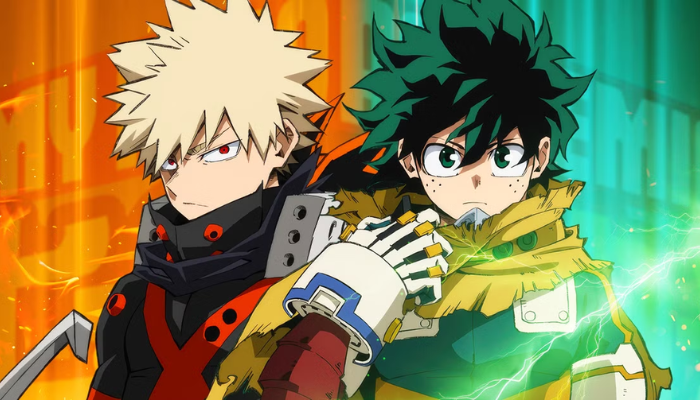
Few modern anime protagonists have undergone a transformation as compelling as deku, the hero name of Izuku Midoriya from My Hero Academia. Created by Kōhei Horikoshi, deku begins his story as an ordinary boy in a society where supernatural abilities known as Quirks are widespread. Despite being born without a Quirk, he dreams of becoming a professional hero. That seemingly impossible ambition becomes the foundation for one of the series’ most memorable character journeys. Official character information identifies Izuku Midoriya as a U.A. High School student whose hero name is Deku and whose inherited Quirk is One For All.
What makes deku fascinating is not simply the enormous power he eventually obtains. His appeal comes from the contrast between extraordinary ability and ordinary vulnerability. He is analytical rather than naturally confident, compassionate rather than aggressive, and frequently terrified even when he chooses to move forward. His growth is therefore about much more than becoming stronger. It is about learning what it means to save people, accept responsibility, work with others, and define heroism for himself.
From his early days as a Quirkless admirer of All Might to his battles as a powerful successor of One For All, deku represents persistence in the face of overwhelming odds. His journey also explores friendship, rivalry, sacrifice, identity, and the consequences of inheriting a power larger than oneself. This combination has helped make Izuku Midoriya one of the defining protagonists of contemporary shōnen anime.
Who Is deku? Understanding Izuku Midoriya’s Origins and Personality
Deku is the hero name of Izuku Midoriya, the central protagonist of My Hero Academia. The series takes place in a world where supernatural abilities called Quirks have become a normal part of society. Heroes are licensed professionals who use their abilities to protect civilians and confront villains. From childhood, Izuku idolizes All Might, the legendary Symbol of Peace, and dreams of following the same path. The central obstacle is devastatingly simple: Izuku is born without a Quirk. The official My Hero Academia character profile confirms that he was originally Quirkless before inheriting One For All from All Might.
His lack of natural power is important because it establishes one of the most important themes surrounding deku: heroism is fundamentally an action rather than a genetic privilege. Before receiving One For All, Izuku repeatedly demonstrates a willingness to help people despite having no supernatural advantage. His instinct to protect others becomes one of the qualities that eventually convinces All Might that he is worthy of inheriting One For All.
Deku’s personality is equally important to his popularity. He is intelligent, observant, emotional, and intensely curious about other heroes and their Quirks. His notebooks, calculations, and detailed observations allow him to analyze opponents and develop strategies even when his physical abilities are limited. Rather than relying exclusively on raw strength, he often studies how powers work and searches for creative ways to combine his abilities with the environment and the talents of his teammates.
At the same time, deku is far from a flawless hero. His willingness to sacrifice himself can become reckless, and his desire to save everyone sometimes causes him to shoulder responsibilities that should be shared with others. These weaknesses make his development feel more authentic. He does not simply become stronger; he gradually learns that being a hero also means trusting friends, accepting help, and understanding the limits of his own body.
One For All and the Evolution of deku’s Powers
One For All is the defining power behind deku’s transformation. All Might passes the Quirk to Izuku after recognizing the boy’s heroic potential. Unlike a simple physical enhancement, One For All carries a complicated history because it is connected to previous users and can be passed from one person to another. The official character profile describes Izuku as inheriting One For All from All Might and notes that he can eventually make use of multiple Quirks belonging to previous holders.
Initially, One For All is almost too powerful for Izuku to control. His body cannot safely withstand its full force, meaning that using too much power can cause serious injury. This creates an unusual progression for a superhero protagonist: deku possesses incredible potential but must gradually learn how to use it without destroying himself. His early fighting style reflects this struggle, as he experiments with controlled bursts, different percentages of power, and techniques designed to distribute force more effectively.
Over time, deku’s combat style becomes increasingly sophisticated. Rather than simply punching harder, he incorporates movement, kicks, ranged techniques, mobility, and strategic positioning. His Shoot Style is one example of this evolution. It reflects a broader change in his thinking: instead of imitating All Might completely, Izuku begins creating a fighting style suited to his own body and personality.
The later development of One For All adds another layer. Izuku gains access to abilities associated with earlier holders, dramatically expanding his tactical options. Abilities such as Blackwhip, Float, Danger Sense, Smokescreen, Fa Jin, and Gearshift allow him to approach battles from multiple angles. This development turns deku into a versatile fighter whose greatest advantage is not necessarily any individual ability but his capacity to combine different powers creatively.
That versatility is especially important because deku has always been an analytical fighter. He studies opponents, recognizes patterns, calculates risks, and adapts when his initial plan fails. The result is a hero who frequently wins through a combination of courage and problem-solving rather than brute force alone. Official game material likewise presents multiple versions of Izuku, including One For All and Shoot Style variations, reflecting how his fighting identity evolves throughout the story.
Deku’s Relationships, Rivalries, and Growth as a Hero
Deku’s development cannot be separated from the people around him. One of his most important relationships is his complicated rivalry with Katsuki Bakugo. Their relationship begins during childhood, when Bakugo is confident and naturally talented while Izuku is Quirkless and repeatedly treated as inferior. Bakugo’s nickname for Izuku eventually becomes “Deku,” originally carrying a dismissive meaning. Over time, however, the name takes on a different emotional significance as Izuku embraces it as his hero identity.
Their rivalry is effective because neither character remains static. Bakugo’s development gradually challenges his earlier arrogance, while deku learns to stop defining himself through Bakugo’s judgment. Their relationship evolves from an unhealthy childhood dynamic into a much more complex combination of competition, mutual respect, frustration, and shared determination.
Another crucial relationship is the bond between Izuku and All Might. To deku, All Might begins as an almost unreachable symbol of perfection. Becoming his successor changes that relationship. Izuku eventually sees not only the legendary hero but also the vulnerable person behind the public image. Meanwhile, All Might learns that passing on his legacy means more than transferring a Quirk. He must help Izuku develop into his own kind of hero.
Deku’s friendships with his classmates are equally significant. U.A. High School gives him an environment where he is surrounded by people with different abilities, personalities, and philosophies. Characters such as Ochaco Uraraka, Shoto Todoroki, Tenya Iida, and many other members of Class 1-A influence his development. Rather than presenting heroism as a solitary pursuit, the series repeatedly emphasizes teamwork and mutual support.
This is one reason deku’s story resonates beyond conventional power fantasies. His victories are rarely just about defeating an opponent. They frequently involve protecting someone, understanding an enemy, inspiring a teammate, or refusing to abandon a person in danger. His heroism is therefore rooted in empathy.
The distinction becomes particularly important as the story becomes darker. As the threats surrounding society increase, deku is forced to confront difficult questions about responsibility and sacrifice. His instinct is often to save everyone, even at tremendous personal cost. Eventually, his growth requires him to understand that saving people does not mean carrying every burden alone.
Dark Deku, Major Battles, and the More Mature Side of His Character
One of the most memorable phases of deku‘s journey is his darker period, often associated with the “Dark Deku” version of the character. This stage represents a major shift from the enthusiastic student introduced at the beginning of the story. Instead of relying heavily on his classmates, Izuku becomes increasingly isolated and focused on stopping threats before they can harm others.
Dark Deku is compelling because the transformation is not simply a visual redesign. It reflects the psychological cost of heroism. The more Izuku believes that he must protect everyone himself, the more exhausted and isolated he becomes. His deteriorating appearance mirrors an internal problem: the boy who once needed help is beginning to believe that accepting help is a weakness.
This phase reinforces one of the central messages of My Hero Academia: even the strongest hero can become vulnerable when they try to carry everything alone. Deku’s classmates eventually play an essential role in pulling him back toward the community he had built at U.A. Their intervention demonstrates that friendship is not merely a pleasant subplot; it is part of the foundation that allows Izuku to remain a hero without losing himself.
His major battles throughout the series also demonstrate how dramatically his abilities and mindset develop. Early encounters often involve Izuku struggling simply to use One For All without injuring himself. Later confrontations require him to coordinate multiple abilities, make rapid tactical decisions, and confront enemies whose motivations are more complicated than simple evil.
The broader conflict between heroes and villains also forces deku to question the assumptions of his society. Rather than treating every villain as an irredeemable monster, he increasingly tries to understand the circumstances that shaped them. This does not mean excusing destructive behavior. Instead, it expands his definition of what it means to save someone.
That idea becomes particularly significant when considering deku’s relationship with the story’s larger themes. My Hero Academia begins with a straightforward superhero premise but gradually asks whether a society built around powerful heroes has done enough to address the people who fall through its cracks. Deku’s increasingly empathetic perspective allows the story to explore these questions through the eyes of someone whose defining characteristic is his desire to reach out to others.
The result is a protagonist whose greatest development is arguably emotional rather than physical. He becomes more powerful, but he also becomes more capable of understanding fear, loneliness, responsibility, and the complicated relationship between saving someone and defeating them.
Deku’s Legacy and Why His Story Continues to Matter
Deku’s legacy is ultimately built on the idea that heroism begins with the decision to act. His story starts with a powerless boy who watches heroes from a distance and wonders whether someone like him can ever belong among them. By the end of his journey, the question has transformed. Instead of asking whether he has what it takes to become a hero, he must determine what kind of hero he wants to be.
This distinction explains why deku has remained so popular among My Hero Academia fans. He is powerful, but power is never presented as the only measure of worth. His greatest qualities—empathy, persistence, intelligence, courage, and his refusal to ignore someone in need—exist independently of One For All.
The character’s cultural impact is also reflected in the wider My Hero Academia franchise. Izuku appears prominently across games, collectibles, promotional material, and other adaptations. Bandai Namco’s official character roster, for example, features multiple versions of Izuku, including One For All and other iterations of his character. The franchise’s continued character merchandise and releases also demonstrate the enduring popularity of the series and its central cast.
Perhaps the most meaningful aspect of deku’s legacy is that his journey challenges a familiar superhero assumption: that heroes are defined primarily by extraordinary abilities. Izuku begins without one, yet he already possesses the quality that ultimately matters most—the willingness to help.
That is why his story remains compelling even when viewed beyond the battles and spectacular Quirks. Deku represents growth. He represents the uncomfortable process of discovering that good intentions are not enough, while also recognizing that compassion is powerful. He makes mistakes, becomes overwhelmed, relies on others, and repeatedly gets back up.
Conclusion:
deku is more than a popular anime protagonist or the successor to One For All. He is the emotional center of My Hero Academia and a character whose journey explores what heroism means when strength alone cannot solve every problem. His transformation from a Quirkless admirer of All Might into a capable hero is ultimately a story about perseverance, empathy, friendship, and choosing to help others even when the outcome is uncertain. That combination is what makes deku memorable—and why his story continues to connect with audiences long after the excitement of any individual battle has ended.
Frequently Asked Questions About deku
1. Who is deku?
Deku is the hero name of Izuku Midoriya, the main protagonist of My Hero Academia. He was originally born without a Quirk but later inherited One For All from All Might. His determination to become a hero despite lacking natural abilities is the foundation of his character.
2. Why is Izuku Midoriya called deku?
“Deku” began as a nickname used by Katsuki Bakugo toward Izuku. It originally had a negative or dismissive connotation, but Izuku eventually adopted it as his hero name. The meaning of the nickname changes as the story progresses, turning something originally intended as an insult into an important part of his identity.
3. What is deku’s Quirk?
Deku’s most important Quirk is One For All, which he inherits from All Might. One For All grants tremendous physical power and has a unique connection to previous holders. As Izuku develops, he is able to access abilities associated with earlier users, giving him a broader range of techniques.
4. Was deku born with a Quirk?
No. Izuku Midoriya was born Quirkless. His lack of a Quirk is a central part of his origin story and makes his eventual inheritance of One For All particularly meaningful.
5. Who gave deku One For All?
All Might chose Izuku as his successor and passed One For All to him. The decision was based on Izuku’s willingness to risk himself to help someone in danger, demonstrating the heroic qualities All Might believed a successor needed.
6. Is deku stronger than All Might?
The answer depends on the point in the story being discussed and how the characters’ abilities are compared. Deku develops an exceptionally versatile version of One For All and gains access to abilities associated with previous users. However, All Might’s own mastery and experience with the power make direct comparisons more complicated than simply asking who has the larger attack.
7. What fighting style does deku use?
Deku develops several approaches to combat throughout the series. He initially relies heavily on powerful punches but eventually develops a more mobile style involving kicks, controlled power, ranged attacks, and combinations of his different abilities. His analytical mindset is an important part of his fighting style.
8. What is Dark Deku?
Dark Deku refers to a darker period in Izuku’s character arc when he becomes increasingly isolated and takes on an intense burden of responsibility. His appearance and fighting style become more rugged, reflecting his exhaustion and increasingly solitary approach to hero work.
9. Why is deku such a popular character?
Deku is popular because his story combines powerful superhero action with relatable personal struggles. He begins as someone who lacks the ability he believes he needs most, yet he continues pursuing his dream. His intelligence, kindness, determination, friendships, failures, and growth make him more multidimensional than a typical invincible hero.
10. What makes deku important to My Hero Academia?
Deku embodies many of the central themes of My Hero Academia, particularly the idea that heroism is defined by the desire to help others. His journey connects the story’s ideas about inherited power, responsibility, friendship, sacrifice, and societal change. Ultimately, his character asks a simple but powerful question: what does it really mean to be a hero?
About the Author