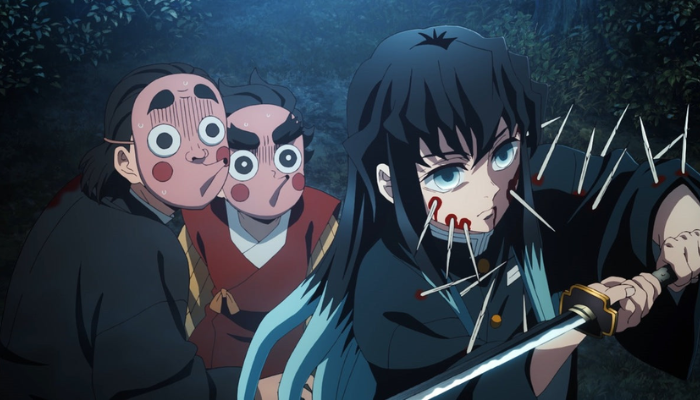

Muichiro Tokito is one of the most memorable characters in Demon Slayer: Kimetsu no Yaiba. Known as the Mist Hashira, he initially appears distant, distracted, and almost completely detached from the people around him. His calm expression and unusual way of speaking make him seem mysterious, while his extraordinary talent quickly establishes him as one of the strongest young Demon Slayers in the series. However, beneath his seemingly emotionless personality lies a deeply moving story shaped by loss, trauma, family, and rediscovered purpose.
What makes muichiro especially compelling is the contrast between who he appears to be and who he truly is. At first, he seems indifferent to the struggles of others and uninterested in anything that does not immediately concern him. As his story develops, however, readers and viewers discover that his behavior is connected to painful experiences and lost memories. His journey from emotional isolation to renewed humanity becomes one of the most powerful character arcs in Demon Slayer. This article explores muichiro in depth, including his background, personality, abilities, relationships, major battles, and the legacy that continues to make him a fan favorite.
Muichiro Tokito’s Background and Tragic Family History
Muichiro was born into a life that changed dramatically at a young age. He grew up with his twin brother, Yuichiro Tokito, and although the two boys were very different in personality, their lives were deeply connected. Their family history became one of the most important foundations of Muichiro’s character. After losing their parents, the brothers were forced to face a difficult and uncertain future largely on their own. The experience of losing the people closest to him created emotional wounds that would later influence Muichiro’s personality and worldview.
Yuichiro became increasingly harsh and pessimistic, believing that kindness and compassion were weaknesses in a dangerous world. Muichiro, on the other hand, retained a gentler nature despite the hardships he had experienced. This difference created tension between the brothers, but it also revealed an important part of Muichiro’s identity. Even before becoming a Demon Slayer, he possessed a natural capacity for empathy and kindness. Those qualities were eventually buried beneath trauma, but they were never completely destroyed.
A turning point in muichiro’s childhood came when tragedy struck the brothers once again. Their lives were attacked by a demon, forcing Muichiro to confront unimaginable violence and loss. During this traumatic event, he suffered severe emotional and physical consequences. His memories became fragmented, leaving him unable to fully remember important details about his past. The person he became afterward was shaped by that memory loss. He continued living and fighting, but much of his emotional connection to the world appeared to disappear.
This forgotten past explains why Muichiro initially seems so detached. He is not simply cold by nature. Instead, he is a young person carrying trauma that he does not consciously understand. His emotional distance functions almost like a barrier between himself and the pain he has experienced. As his memories gradually return, audiences begin to see the connection between his past and his present behavior. This transformation gives his character far more depth than his early appearances suggest.
Muichiro’s Personality and Character Development
At the beginning of his story, muichiro is often perceived as absent-minded, blunt, and emotionally distant. He frequently appears lost in thought and can become distracted during important conversations. His attention seems to drift from one idea to another, making him appear disconnected from the people around him. He is also known for speaking honestly without much concern for how his words might affect others. This can make him seem rude, even when he is not intentionally trying to hurt anyone.
However, Muichiro’s personality is much more complex than simple indifference. His detached behavior is closely connected to his lost memories and unresolved trauma. Without a clear understanding of his past, he has become disconnected from many of the emotions and experiences that once defined him. He continues moving forward, training, and fighting, but his life initially lacks a strong emotional direction. In many ways, he is surviving rather than truly living.
One of the most significant changes in muichiro’s character occurs through his interactions with Tanjiro Kamado. Tanjiro’s compassion and determination gradually influence him, encouraging him to think differently about other people and his own purpose. Muichiro begins to remember that even small acts of kindness can have meaning. He also starts to reconnect with emotions that had been buried beneath his traumatic memories.
After recovering important parts of his past, Muichiro becomes noticeably more expressive and compassionate. He still maintains his calm and quiet nature, but he is no longer emotionally unreachable. His growth demonstrates that remembering pain does not always weaken a person. In Muichiro’s case, confronting the truth about his past allows him to recover the strength and humanity that trauma had hidden.
This development is one reason muichiro stands out among the Hashira. His transformation is not based solely on becoming physically stronger. His greatest growth is emotional. He learns that strength and compassion can exist together, and he eventually embraces the qualities that connect him to his family and his original sense of self. By the time his character arc reaches its later stages, he has become far more complete than the distant young swordsman introduced at the beginning.
Muichiro’s Powers, Mist Breathing, and Extraordinary Talent
As the Mist Hashira, muichiro is an exceptionally skilled swordsman who uses Mist Breathing. This fighting style is designed around movement, deception, speed, and unpredictability. Rather than relying on direct and easily readable attacks, Mist Breathing creates confusion and makes it difficult for opponents to determine where the swordsman will strike next. The style perfectly reflects Muichiro’s personality and appearance, giving him a combat presence that feels almost impossible to follow.
Muichiro’s movements can appear sudden and disorienting, much like mist shifting across a landscape. His opponents may believe they understand his position or speed, only to discover that he has already moved. This ability to disrupt an enemy’s perception makes him especially dangerous against powerful demons. His combat style requires remarkable agility, timing, and control, all of which Muichiro possesses at an unusually high level.
What makes muichiro even more impressive is how young he is compared with many other elite Demon Slayers. Despite his age, he achieved the rank of Hashira after an extraordinarily short period of training. His natural talent is repeatedly shown to be exceptional. He possesses remarkable reflexes, physical ability, and an instinctive understanding of combat. Yet his strength is not presented as effortless perfection. His greatest achievements still require courage, determination, and a willingness to continue fighting even when victory seems impossible.
A major aspect of Muichiro’s power is his ability to adapt during battle. He does not depend only on raw strength. He observes his opponent, changes his approach, and uses his intelligence to create opportunities. This makes him a dangerous fighter even against enemies with overwhelming supernatural abilities. His calmness also allows him to make decisions quickly under pressure.
Muichiro eventually reaches even greater levels of power as his memories and sense of identity return. The emotional transformation he experiences becomes connected to his fighting ability. He gains a clearer understanding of what he is protecting and why he continues to fight. In Demon Slayer, emotional conviction often strengthens a character’s determination, and Muichiro is a powerful example of this idea. His growth as a person and his growth as a warrior become closely connected.
Muichiro’s Most Important Relationships and Battles
The relationships surrounding muichiro play a major role in revealing his true personality. His connection with Yuichiro is particularly important because it represents both love and pain. Although the brothers argued and often seemed emotionally divided, their relationship was far more meaningful than it first appeared. Yuichiro’s harsh behavior concealed his own fears and deep concern for Muichiro. Understanding this truth becomes essential to Muichiro’s emotional recovery.
Muichiro’s relationship with Tanjiro is also important to his development. Tanjiro does not force him to change or demand that he become more emotional. Instead, his actions and words gradually remind Muichiro of values he had forgotten. Their interactions show how a brief encounter can have a lasting influence on someone’s life. Tanjiro’s kindness becomes a catalyst that helps Muichiro reconnect with his own buried compassion.
His relationships with other Demon Slayers also reveal different aspects of his character. As a Hashira, Muichiro belongs to a group filled with strong and highly individual personalities. Compared with many of them, he is unusually quiet and reserved. Yet as he grows, he becomes more capable of connecting with others. His presence demonstrates that leadership does not always require constant speech or an outgoing personality. Sometimes quiet strength can be just as powerful.
In battle, muichiro faces enemies who force him to confront both physical and emotional limits. His most memorable fights demonstrate his speed, technical skill, and extraordinary determination. However, the emotional context behind these battles is equally important. He is not simply fighting to prove that he is strong. As his memories return, he begins fighting with a renewed understanding of what his family meant to him and what he wants to protect.
His battles also highlight the dangerous reality of the Demon Slayer world. Even the most talented characters are vulnerable, and natural ability cannot remove the consequences of war. Muichiro’s willingness to continue fighting despite severe circumstances reflects his courage. He becomes a character who transforms suffering into determination rather than allowing pain to completely define him.
This combination of personal history and combat ability makes muichiro especially memorable. His major battles are exciting because of the action, but they are emotionally powerful because audiences understand what he has overcome. Every step forward represents more than physical progress. It also represents his recovery of identity, memory, and purpose.
Muichiro’s Legacy and Why He Remains a Fan-Favorite Character
Muichiro remains one of the most popular characters in Demon Slayer because his story combines mystery, tragedy, talent, and emotional growth. He initially attracts attention because of his distinctive design and calm personality. His long hair, distant expression, and unique Mist Breathing techniques create an unforgettable presence. However, his popularity becomes much easier to understand once his deeper story is revealed.
One of the strongest aspects of Muichiro’s legacy is his transformation. He begins as someone who seems disconnected from the world and gradually becomes someone who understands the value of human connection. This makes his journey emotionally satisfying. Audiences do not simply watch him become stronger; they watch him become more himself. His true personality was never entirely gone. It had simply been buried beneath trauma and forgotten memories.
Muichiro also represents the idea that emotional sensitivity is not the opposite of strength. His kindness does not make him weak, and his pain does not make him incapable. Instead, his experiences eventually become part of the foundation of his strength. This message resonates because it challenges the idea that powerful people must be emotionally distant. Muichiro becomes stronger when he allows himself to remember, care, and connect.
Another reason muichiro has such a lasting impact is his youth. His accomplishments are extraordinary, but his story also reminds audiences that he is still a young person who has experienced devastating loss. The contrast between his age and the enormous responsibilities placed upon him creates a sense of tragedy. He is gifted with exceptional talent, yet he is forced to grow up in an environment defined by danger and death.
His legacy within the story is therefore connected to both admiration and sadness. Muichiro demonstrates what can happen when extraordinary talent is combined with courage and determination, but his life also reflects the harsh cost of the world he inhabits. His character remains memorable because he is not defined by a single trait. He is talented but vulnerable, quiet but caring, distant but capable of deep emotion.
Ultimately, muichiro continues to resonate with fans because his story feels human despite its supernatural setting. Many people understand the experience of feeling disconnected after difficult events, struggling to understand themselves, or slowly rediscovering what matters. Muichiro’s journey turns these emotional experiences into a powerful narrative of recovery and identity.
Conclusion
Muichiro Tokito is far more than the quiet Mist Hashira with extraordinary sword skills. His story is a powerful exploration of memory, grief, identity, compassion, and personal growth. What initially appears to be indifference is eventually revealed to be the result of deep trauma and emotional loss. As he reconnects with his past, he also reconnects with the qualities that make him truly strong.
His mastery of Mist Breathing and exceptional natural talent make him one of the most impressive warriors in Demon Slayer, but his emotional development gives his character lasting meaning. Muichiro’s greatest strength is not simply his speed, swordsmanship, or ability to defeat powerful enemies. It is his ability to rediscover his humanity after believing, in many ways, that he had lost it.
The story of muichiro also shows that healing is not always about forgetting pain. Sometimes healing begins when a person is finally able to face the past and understand it. Through his memories, relationships, and battles, Muichiro discovers a renewed sense of purpose. He learns that caring about others does not make him vulnerable in a negative way; instead, it gives his life and actions greater meaning.
For fans of Demon Slayer, Muichiro remains an unforgettable character because he combines breathtaking talent with genuine emotional depth. His journey from isolation to connection is one of the series’ most meaningful character arcs, ensuring that the Mist Hashira’s legacy continues long after his most memorable battles.
Frequently Asked Questions About Muichiro
1. Who is Muichiro Tokito?
Muichiro Tokito is the Mist Hashira in Demon Slayer: Kimetsu no Yaiba. He is one of the youngest and most naturally talented members of the Demon Slayer Corps.
2. Why is Muichiro so absent-minded?
Muichiro’s distracted and detached personality is strongly connected to traumatic experiences and lost memories from his childhood. As he regains his memories, more of his original personality returns.
3. What Breathing Style does Muichiro use?
Muichiro uses Mist Breathing, a style based on speed, movement, deception, and confusing opponents about his position and attacks.
4. How did Muichiro become a Hashira so quickly?
Muichiro possessed extraordinary natural talent as a swordsman. His exceptional physical abilities and rapid development allowed him to reach Hashira level at a remarkably young age.
5. Does Muichiro regain his memories?
Yes. Muichiro gradually recovers important memories from his childhood, especially memories connected to his family and twin brother. This recovery significantly changes his personality.
6. Who is Muichiro’s twin brother?
Muichiro’s twin brother is Yuichiro Tokito. Their relationship is a major part of Muichiro’s backstory and emotional development.
7. Why is Muichiro important to the Demon Slayer story?
Muichiro is important because his character arc explores trauma, memory, personal identity, and emotional recovery while also contributing major moments of action and conflict.
8. Is Muichiro one of the strongest Hashira?
Muichiro is considered one of the most talented Hashira, particularly because of his young age and rapid development. His exceptional speed, skill, and potential make him an extraordinary fighter.
9. How does Tanjiro influence Muichiro?
Tanjiro’s kindness and determination help Muichiro reconsider his detached attitude. Their interactions contribute to Muichiro reconnecting with his emotions and rediscovering his compassion.
10. Why do fans like Muichiro so much?
Fans appreciate Muichiro because of his unique personality, tragic backstory, impressive combat abilities, emotional development, and memorable journey from isolation toward renewed humanity.
About the Author